


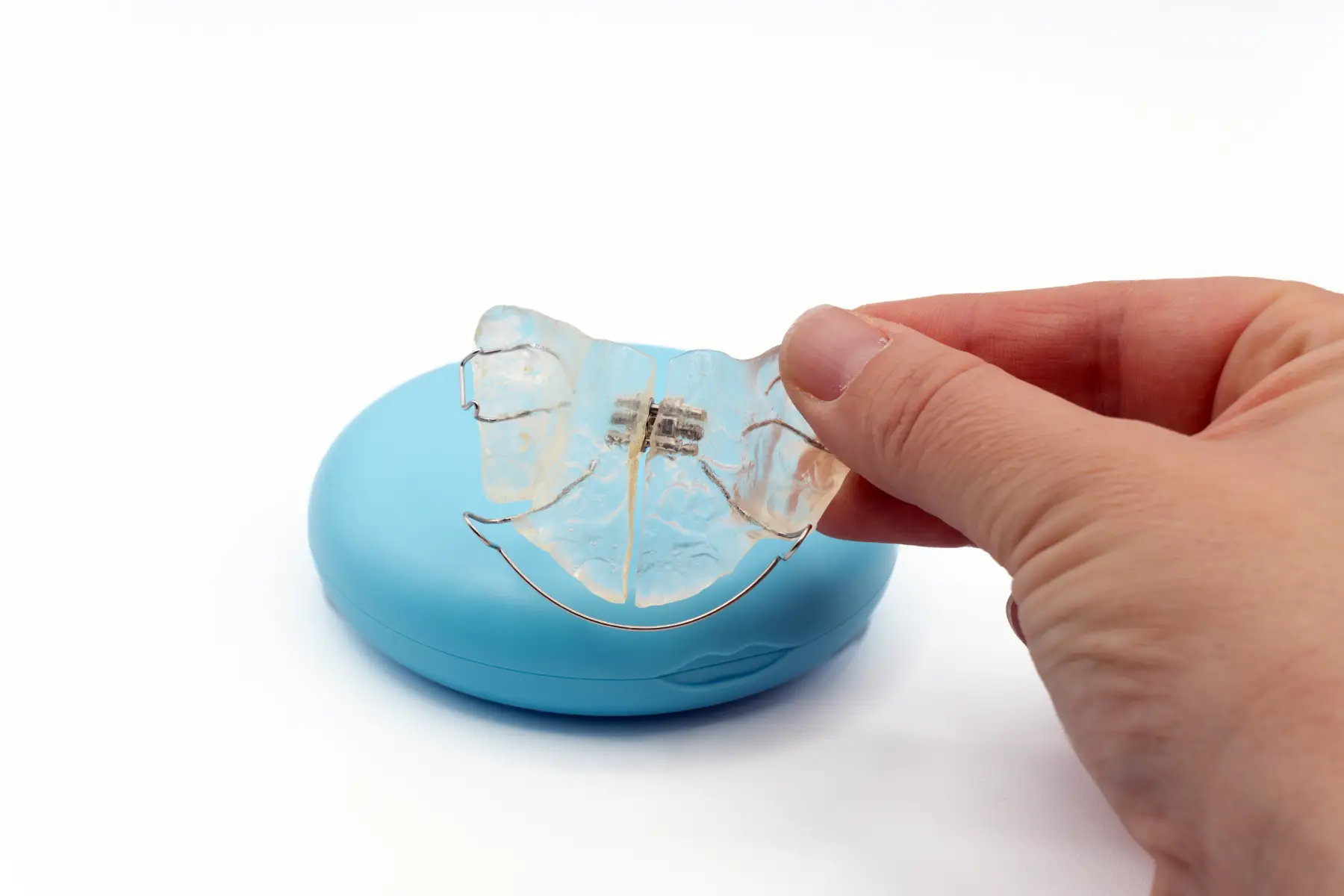
A retainer spends hours pressed against your teeth, so it does not stay clean on its own. It collects saliva, plaque, bacteria, and tiny food particles, even when it looks clear at first glance.
The good news is that retainer care does not need to be complicated. With the right daily routine, you can keep your retainer fresher, more comfortable, and safer for your smile.
What is the best way to clean retainers?
- Rinse the retainer with lukewarm water after removal.
- Brush it gently with a separate soft toothbrush.
- Use mild soap or a dentist-recommended cleaner.
- Rinse well before placing it back in your mouth.
- Store it in a clean case when not wearing it.
That routine works for many removable retainers, but your exact instructions may depend on the type you wear. Clear plastic retainers, Hawley retainers, and permanent retainers all need cleaning, but they are not cleaned in exactly the same way.
Here’s the thing: a clean retainer is not just about fresh breath. It is also about protecting your gums, teeth, and the fit of the appliance. If buildup stays on the retainer too long, it can harden, smell, irritate tissue, or make the retainer feel rough.
Cleaning also helps you notice problems earlier. Cracks, warping, white buildup, yellow stains, loose wires, or changes in fit are easier to spot when your retainer is not covered in residue.
Why cleaning your retainer matters
A retainer is part of your oral health routine. If you clean your teeth but place a dirty retainer back over them, you are putting bacteria and buildup right back into your mouth.
It helps control plaque and bacteria
Retainers sit close to the same areas where plaque collects: around the gumline, between teeth, and along tooth surfaces. Because they touch saliva all day or all night, they can pick up bacteria and food residue quickly.
If you skip cleaning, the retainer may start to smell bad or look cloudy. Your gums may also feel irritated, especially where the retainer rubs or presses. Over time, a dirty retainer can make your mouth feel less fresh even when you brush your teeth.
This is why rinsing and brushing the retainer matter. A quick rinse removes loose saliva before it dries, while gentle brushing helps remove the film that can build up on the surface.
It protects the retainer material
Retainers can be made from clear plastic, acrylic, metal wire, or a mix of materials. These materials are strong enough for daily use, but they can still be damaged by heat, harsh chemicals, or rough cleaning.
Gentle cleaning helps prevent buildup from hardening on the surface. Once white or yellow mineral deposits become stubborn, they can be harder to remove without professional help. Regular care is easier than trying to rescue a neglected retainer later.
Clear plastic retainers can become cloudy or scratched if cleaned too aggressively. Hawley retainers can collect residue around the acrylic base and wire. Permanent retainers can trap plaque around the bonded wire behind the teeth.
Different materials, same lesson: clean gently and consistently.
It helps your retainer fit and feel better
A retainer should feel secure, not dirty, rough, or painful. When buildup collects on the surface, the appliance may feel thicker, tighter, or less smooth against your gums, tongue, or cheeks.
Cleaning can help with comfort when the problem is residue. But cleaning will not fix a retainer that is warped, cracked, bent, or no longer seating properly. That kind of fit change needs a dental or orthodontic evaluation.
If your retainer suddenly feels painful after cleaning, does not fit all the way, or creates pressure in one specific area, do not force it. The issue may be shifting teeth, appliance damage, or changes in your bite.
How to clean removable retainers every day
Removable retainers are easier to clean because you can take them out and reach every surface. The key is to clean them before buildup has time to dry and harden.
Rinse it every time you remove it
Every time you take out your retainer, rinse it with lukewarm water. This simple step helps remove saliva and loose debris before they dry on the appliance.
Use lukewarm water, not hot water. Hot water can warp plastic retainers and change the fit. Once a retainer is warped, it may stop holding your teeth correctly or may create uncomfortable pressure.
Rinsing is especially helpful in the morning if you wear your retainer overnight. Saliva can dry quickly, leaving a film that smells unpleasant or feels sticky. A quick rinse keeps that film from sitting there all day.
If you remove your retainer before eating, rinse it before placing it in the case. Then rinse it again before putting it back in your mouth. Simple, but it helps.
Brush it gently with a separate toothbrush
Use a separate soft toothbrush for your retainer. Do not use the same toothbrush you use for your teeth, especially if it has toothpaste residue or worn bristles.
Brush the inside and outside surfaces gently. Focus on grooves, edges, and any area that touches your teeth or gums. For a Hawley retainer, clean around the acrylic base and wire without bending the wire.
The word “gently” matters. Scrubbing hard can scratch clear plastic or damage delicate areas. Scratches can make the retainer look cloudy and may give bacteria more places to cling.
A good daily brushing routine should leave the retainer feeling smooth and clean, not rough or sticky. If it still smells bad or looks cloudy after daily cleaning, it may need a deeper clean or professional advice.
Use mild soap or a recommended cleaner
For many removable retainers, mild clear soap or a dentist-recommended retainer cleaner can be a safer choice than harsh products. Use a small amount, brush gently, and rinse very well before placing the retainer back in your mouth.
Be careful with toothpaste, especially on clear plastic retainers. Some toothpaste formulas are abrasive and may scratch the surface. If your dentist or orthodontist gave you specific instructions, follow those first.
Retainer cleaning tablets may also be useful, but they should be used as directed. More soaking is not always better. Too much time in the wrong solution can affect certain materials or leave an unpleasant taste.
The goal is simple: clean the retainer without damaging it. Fresh, smooth, and properly fitted is the sweet spot.
How to deep clean retainers safely
Daily cleaning handles most of the routine buildup, but some retainers need occasional deep cleaning. This is especially true if you notice odor, cloudy film, white deposits, or a rough feeling that does not go away after brushing.
Use soaking products only as directed
Retainer cleaning tablets or dentist-recommended soaking solutions can help loosen buildup and freshen the appliance. They are useful when regular brushing is not enough.
Follow the instructions on the product or the guidance from your dentist. Do not mix cleaning products, and do not assume that a longer soak is better. Some materials can be affected by strong solutions or too much soaking time.
After soaking, rinse the retainer well with lukewarm water. It should never taste like cleaner when you put it back in your mouth.
Be careful with vinegar or baking soda
Some people use diluted vinegar or baking soda for odor or mineral buildup. These may help in certain cases, but they are not the right choice for every retainer.
If you use them, keep it gentle and occasional. Avoid harsh scrubbing, strong mixtures, or long soaking times unless your provider says it is safe for your retainer type.
When in doubt, ask first. A cleaner that seems harmless can still affect plastic, acrylic, wires, or bonded areas if used the wrong way.
How to clean different types of retainers
Clear plastic retainers
Clear plastic retainers need gentle care because they can warp with heat and scratch with abrasive cleaners. Rinse them with lukewarm water, brush softly, and avoid hot water, rough toothpaste, bleach, or alcohol-heavy mouthwash.
If your clear retainer turns cloudy, smells bad, or stops fitting well, cleaning may not solve the problem. It may need professional cleaning, adjustment, or replacement.
Hawley retainers
Hawley retainers have an acrylic base and metal wire. Clean both areas carefully, especially around edges where buildup can collect.
Hold the retainer gently while brushing, and avoid bending the wire. If the wire feels loose, sharp, or uneven, do not try to reshape it yourself.
Permanent retainers
Permanent retainers are bonded behind the teeth, so you cannot remove them for cleaning. Brush around the wire every day and pay close attention to the gumline.
Flossing takes more effort, but it matters. A floss threader, interdental brush, or water flosser can help clean under and around the wire. If plaque hardens into tartar, only a dental professional can remove it safely.
Retainer cleaning mistakes to avoid
Good retainer care is also about knowing what not to do. Avoid these common mistakes:
Do not use hot water.
Do not use bleach or harsh chemicals.
Do not put your retainer in the dishwasher.
Do not soak it in alcohol-based mouthwash unless your provider approves.
Do not wrap it in a napkin or leave it loose.
Do not ignore bad odor, cracks, warping, pain, or fit changes.
The retainer case matters too. Clean the case regularly, let it dry, and replace it if it becomes cracked or dirty. A clean retainer stored in a dirty case can pick up bacteria again.
When to ask a dentist about your retainer
A retainer should feel clean, smooth, and secure. Ask a dentist or orthodontic provider if it has persistent odor, white or yellow buildup, cracks, warping, rough edges, pain, tightness, or no longer seats properly.
These signs can point to more than a cleaning issue. Teeth may have shifted, the retainer may be damaged, or dental work may have changed how it fits. Crowns, veneers, implants, bridges, fillings, and bite changes can all affect comfort.
For U.S. and Canadian patients comparing options, Cancun Cosmetic Dentistry offers a Free Virtual Diagnostic in less than 24 hours. CCD can help you start a treatment conversation if retainer issues are connected to shifting teeth, old dental work, bite changes, or broader smile concerns.
Patients also choose CCD for bilingual communication, clear pricing, state-of-the-art equipment and materials, and airport pickup or shuttle support. Dental care in Cancun can also mean significant savings compared with U.S. prices, with beaches, hotels, restaurants, and easier travel planning nearby.
Keep your retainer clean and your smile protected
The best way to clean retainers is simple: rinse often, brush gently, use safe cleaners, avoid heat, and store them properly. But if your retainer smells bad, hurts, cracks, warps, or stops fitting, cleaning alone is not enough.
Book your Free Virtual Diagnostic with Cancun Cosmetic Dentistry to review your options, request a quote, see prices, or ask about travel and shuttle support.
FAQ
How often should I clean my retainer?
Rinse it every time you remove it and clean it daily, unless your provider gives different instructions. Deep clean only as directed.
Can I clean my retainer with toothpaste?
Some providers allow it for certain retainers, but abrasive toothpaste can scratch clear plastic retainers. Ask your dentist or orthodontist what is safest.
Can hot water damage a retainer?
Yes. Hot water can warp plastic retainers and change the fit, which may affect how well the retainer holds your teeth.
Why does my retainer smell bad?
Odor often comes from bacteria, plaque, saliva, or food residue. If the smell persists after cleaning, ask a dentist.
How do I clean a permanent retainer?
Brush carefully around the bonded wire and floss daily. A floss threader, interdental brush, or water flosser can make cleaning easier.