

When you’re researching for tooth replacement options like artificial teeth and types of dentures, your main goal is to avoid the option that sounds perfect on paper but ends up being a hassle in real life. This guide breaks down the main categories and the oral health trade-offs you’ll actually experience every day.
Dentures can be a great solution when the design is tailored to your mouth, your habits, and your expectations. The key isn’t just “teeth that look fine,” but teeth that you can actually live with comfortably.
Dentures 101: The Complete Guide to What They’re All About & What They Replace
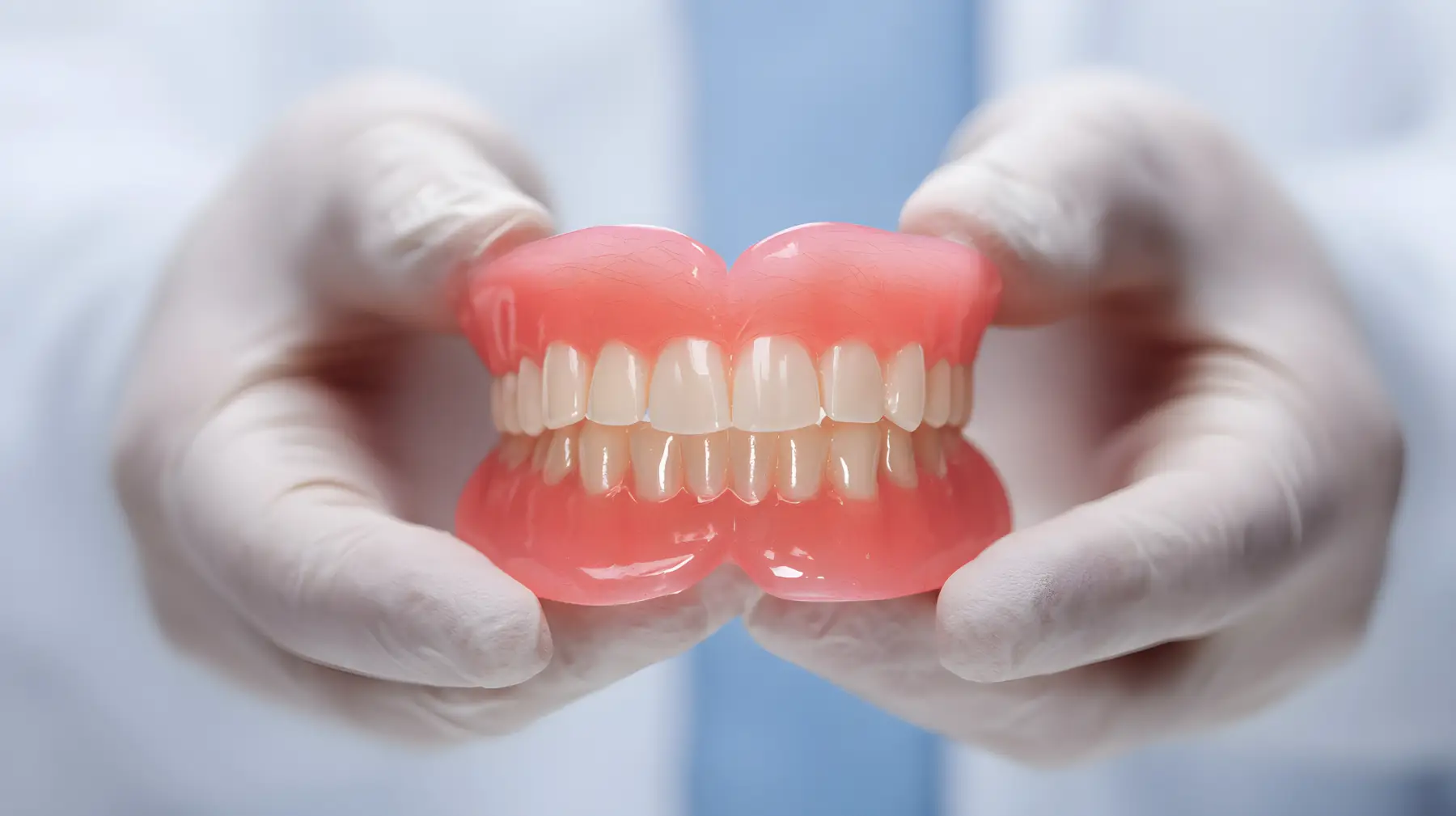
Modern dentures are oral appliances that replace missing teeth. There are many different types of dentures: some are removable, while others attach to dental implants, and each type aims to restore your ability to chew, speak, and support your facial structure.
What you need regarding replacement teeth depends on what’s missing and what’s supporting it. Your gums, if you need bone grafting, and bite relationship all matter, which is why a proper exam and imaging are such a big part of responsible planning.
For travelers, a remote review can be a huge help in narrowing down options early on. Our patients at Cancun Cosmetic Dentistry (CCD) can even send us their photos or X-rays and get a no-obligation video diagnosis from Dr. Germán Arzate.
Different types of dentures at a glance
| Type | Best for | Removable at home? | Stability | Typical tradeoffs |
| Complete (full) | Replacing all teeth in one arch | Yes | Medium | Lower denture can shift; it relines over time |
| Partial | Replacing some teeth | Yes | Medium to high | Clasps or framework; periodic adjustments |
| Immediate | Teeth right after extractions | Yes | Medium (temporary during healing) | Fit changes as gums heal; more follow-ups |
| Implant-retained (snap-in) | More hold without going fully fixed | Yes | High | Implants and attachments; remove to clean |
| Implant-supported (fixed/hybrid) | Most “real teeth” feel | No | Very high | More planning and hygiene; clinic removes for maintenance |
Removable Dentures (the Classic Options)
Traditional removable dentures come out to clean. They rely on your gum contours and upper or lower jaw ridge for support, so the fit is what makes all the difference between “okay” and “I almost forget they’re there.” These are the more conventional dentures out there.
Full Dentures/Complete Dentures
Complete dentures replace all teeth in an upper or lower arch. Uppers can feel steadier because they can use suction against the roof of your mouth, while lowers are often the challenge because there’s less surface area to work with and more tongue movement going on.
Denture adhesives can help out, but they’re not a magic fix for a poor fit. As your jaw ridge changes over time, you may need to get your dentures relined or remade to keep them comfortable and stable.
Partial Dentures, Flexible Dentures, and Metal-Framed Dentures
Partials fill in gaps while you still have some remaining natural teeth. Many are made with metal clasps to give ’em strength and a slim feel, while others use flexible materials to make them more comfortable and look more natural.
Because partial dentures distribute force between the gums and the remaining teeth, the design is super important. A well-made partial should protect the teeth it clasps onto, rather than overloading them, and you should get any bite issues sorted out early on.
Immediate Dentures and Interim Options (Flippers)
Immediate dentures are put in right after extractions, so you’re not going without teeth while your mouth heals. Temporary dentures or “interim partials”, often called flippers, can cover a smaller space for the same time.
The trade-off here is predictability. As swelling goes down and your gums remodel, the fit changes, so adjustments are pretty common and a later reline or final denture is often part of the plan.
Implant Dentures
Implant dentures come in two pretty different experiences: removable dentures that snap onto implants, and fixed teeth that stay put. Knowing which one you want helps avoid misunderstandings.
Implant-Retained Dentures or Snap-In Dentures
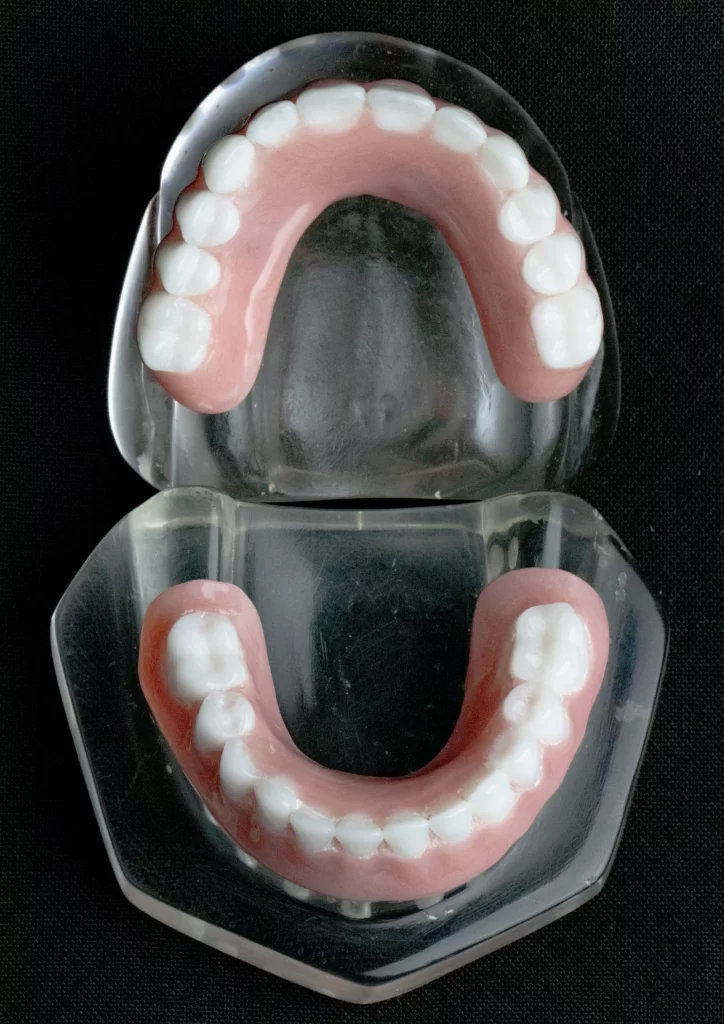
Snap-in dentures use implants as anchors, and then you snap the denture into place. You remove it to clean, and then snap it back in. Many patients choose this for lower dentures because it reduces the sliding around.
You’ll still have some maintenance to do. Attachments can wear out and need replacing, and you’ll need to clean both the denture and the tissue around the implants.
Implant-Supported Dentures: Fixed Dentures, Permanent, and Hybrid Dentures
Fixed implant-supported dentures attach to implants and can’t be removed at home. You brush like natural teeth, then use tools to clean under the bridge.
If your goal is “I don’t ever want to take my teeth out,” the permanent dentures are usually the category you’re looking for. It also requires a bigger commitment to planning, daily cleaning, and visiting your dentist regularly for proper care.
Where All-on-4 Fits In
All-on-4 is a full-arch implant protocol that supports a complete set of teeth on four strategically placed implants. People call it “dentures” because it replaces a full arch, but the day-to-day experience is way closer to fixed teeth than a removable appliance.
Candidacy depends on bone, bite, and health factors, so this is always a diagnosis-first decision. If you’re interested, ask what imaging and measurements are used to confirm you’re eligible.
Materials and Build Quality
Two dentures can be the same “type” but feel totally different. Comfort often comes down to the materials and the workflow, including the base material, the tooth material, the framework or attachments, and how accurately your bite is recorded.
For implant cases, CCD notes it uses CBCT 3D imaging and intraoral scanning for planning, plus it’s got an in-house digital dental lab for CAD/CAM fabrication. CCD also mentions materials like zirconia and titanium frameworks when indicated, and stresses the importance of bilingual communication for informed consent.
How to pick the best kind of denture
Deciding on the right type of denture is all about finding the right balance between comfort, stability, maintenance, and cost. If you’ve only got a few missing teeth, a partial denture might be the way to go, whereas a full-arch tooth loss usually means complete dentures or implant-supported options.
Another thing to think about is whether you want a removable denture that comes out for cleaning or a fixed option that stays put. You’ll want to clean it the same way as your own teeth. If stability is a major worry, then implant-retained dentures might be the way to go; they can really reduce the risk of your dentures slipping or moving around. Your overall gum health, bone structure, and bite strength will all play a part in deciding which option is going to feel most comfortable and last the distance.
And while fixed teeth often feel the most natural, you still need to make sure you’re cleaning underneath them properly. Just bear in mind that lower dentures are often trickier to keep stable, so if you’ve had issues with lower denture movement, it might be worth talking to your dentist about implant-supported solutions right from the get-go.
Dentures costs: what really drives the price
The cost of dentures isn’t one number; it’s a whole stack of decisions. When you’re comparing quotes, think of it like trying to get the best deal on a flight: look for what’s included.
When you’re looking at a plan, make a list of the key things to check: the type of denture, the materials used, any pre-work your dentist might do, the diagnostics they used to get the fit just right, and how they plan to handle any follow-ups. If you’re someone who travels a lot, an itemised plan is crucial. At CCD, we publish a price list and offer quotes, which can give you a pretty good idea of what to expect before you commit. Even then, it’s a good idea to ask your dentist what could change the estimate, things like extractions, repairs, or implant add-ons.
What the treatment process looks like
Most cases follow the same pattern: diagnose, design, deliver, adjust. The only real difference is whether your denture is going to be held in place by your gums or implants.
For removable dentures, the process usually includes an exam and some imaging, then impressions or scans, bite records, and finally delivery and fine-tuning as your denture settles in. At first, you might feel a bit of soreness and get used to speaking with your new denture; it’s all pretty normal.
For implant dentures, you’ll need to add in some planning for where the implants will go, the surgery itself, and some time to heal before you get your final teeth. If you’re feeling sharp pain, or you get ulcers that don’t clear up, or a bite that feels off, don’t just push through; give your dentist a call.
Taking care of dentures, how long do dentures last, and common fixes
Dentures are like any other daily device; you need to treat them with a bit of care. Clean them gently with a soft-bristled brush and a non-abrasive cleaner, clean your gums and tongue every day, and store them as directed.
Over time, your jaw ridge will change, so your denture will need a bit of a makeover. This is usually just a reline, but sometimes you might need to replace the denture entirely. If a denture suddenly feels loose, it’s time to book a check-up.
Dentures vs full-arch implants: who should consider fixed teeth
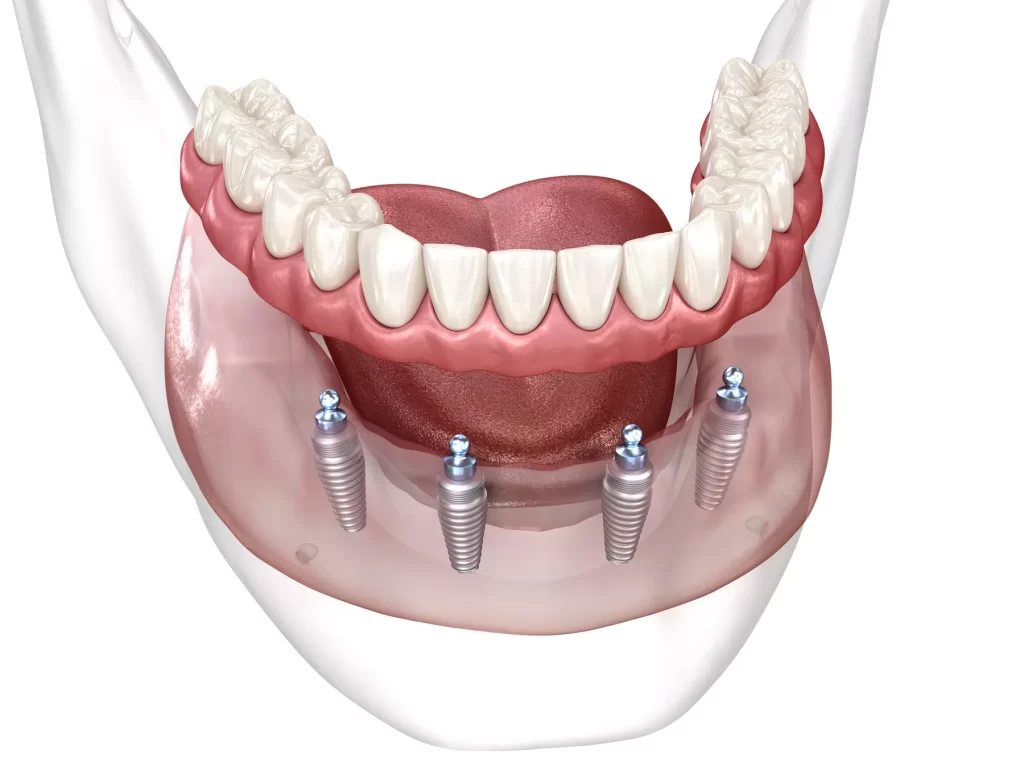
If your top priority is a removable solution that gives you a natural-looking smile without breaking the bank, traditional dentures might be the way to go. If you’re after stability, confident chewing, and teeth that stay in place, then full-arch implants like All-on-4 or fixed implant-supported dentures are definitely worth considering.
Fixed options do require a bit more planning, surgery, and long-term maintenance, but they’re definitely worth it for some people. Not everyone will be a candidate, though, so your dentist will need to take a look at your bone levels, bite forces, and health history before you make a decision.
Planning treatment in Cancún (and why some patients prefer it)
Mexico is a popular destination for dental tourism, with Cancún and Los Algodones being two of the most popular spots. Both have their pros and cons.
Los Algodones is great if you’re in the area and want to pop over the border, but Cancún is fantastic if you want to combine your dental treatment with a bit of beach time. At CCD, we have a fully bilingual team and travel support to make things as smooth as possible, including flights, hotels, restaurants,s and pickups from the airport.
Why Patients Start with CCD’s Free Virtual Diagnostic before an in-person Denture Consultation
Sometimes it’s nice to get a bit of clarity before you commit to a treatment plan. That’s where our Free Virtual Diagnostic comes in. Send us some photos and any recent X-rays or scans you have, and we’ll send you a personalized video diagnosis from Dr. Germán Arzate within 24 hours.
Ask us for four things: recommended options, an itemised estimate, what the expected visits will be, and what follow-up details you can expect. If any warranty applies, get the terms in writing and make sure you know what you need to do to keep it in place.
Our dentists at CCD have 25+ years of experience; we’re proud members of the American Board of Implantology, and we offer warranties for treatments like implants, crowns, and veneers, each on a case-by-case basis, with the terms explained in full before we start.
FAQ
What are the main types of dentures?\
Complete dentures will replace all the teeth in one jaw, while partial dentures fill in the gaps for a few missing teeth. Then there are the immediate dentures, which can be either removable snap-in dentures or fixed dentures, including implant dentures.
Are snap-in dentures removable?
The answer is yes: snap-in dentures are designed to come out for a good cleaning and then pop right back in over implants; many people find this helps with lower-arch stability, which can be a real plus.
How long do dentures last?
Gee, lots of dentures will hang in there for years, but don’t be surprised if the fit starts to change sooner rather than later; the jawbone is constantly shifting, after all. But don’t worry, you can get these relines and repairs to give ’em a bit more life, and then your dentist will let you know when it’s time for a new set of teeth.
Do I need more than one trip for full-arch implants?
Some plans will involve a visit and then a follow-up, maybe a few months later, when the jaw has healed up enough for the final fitting, and other factors like extractions, the condition of the bone, and what type of restoration your dentist thinks is best will all come into play to determine the schedule.