

Tooth loss can affect your overall oral health and make eating and speaking feel awkward, even with just a few gaps. Those small holes can really get in the way of comfort, so, naturally, you’ll start looking for tooth replacement options.
When you’re weighing up dentures vs bridges, you’re looking at a removable option that can replace several teeth at once against a fixed option that usually just fills in one or two gaps. At Cancun Cosmetic Dentistry (CCD), Dr. Germán Arzate starts by getting a clear picture of what you need and making a plan that makes sense for you.
Bridges and Dentures: The One-Minute Difference
| Option | Fixed or removable | Best for | Biggest trade-off |
| Dental bridge | Fixed | 1 to 2 missing teeth with strong, healthy teeth supporting next to the gap | Cleaning under it, supporting teeth do the heavy lifting |
| Partial denture | Removable | Several missing teeth | You remove it to clean; the fit can change |
| Complete denture | Removable | Most or all teeth are missing in an arch | Adjustment period: relines over time |
When Dental Bridges are the right choice to replace missing teeth
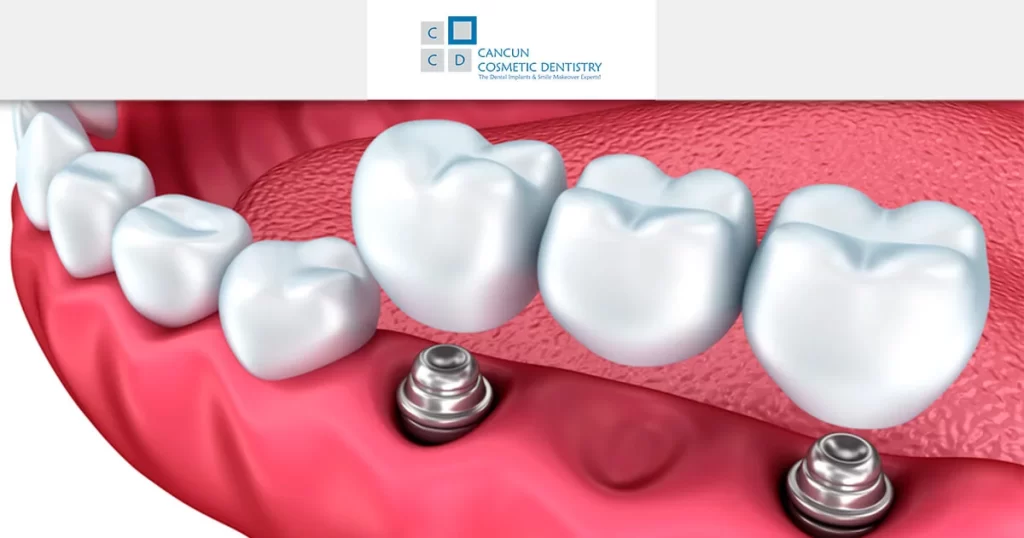
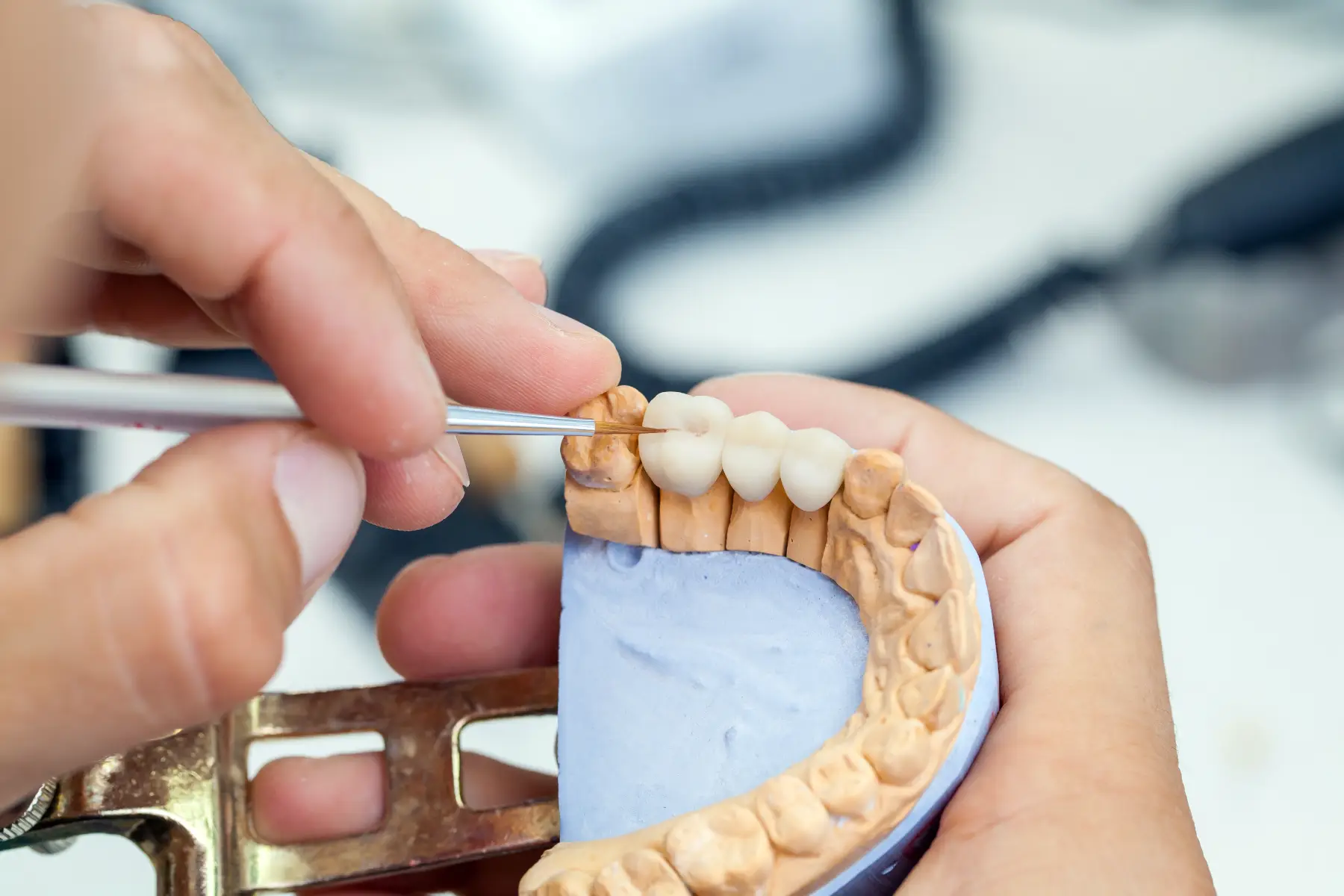
A dental bridge fills the gap left by a missing tooth (the pontic); it’s held in place by the adjacent natural teeth next to it, often with dental crowns on those supporting teeth. It all comes down to the support of those surrounding teeth, because the bridge is only as good as what is holding it up.
Sometimes a bridge can be anchored with dental implants instead of the adjacent teeth, but that really depends. You need good bone support to anchor them, so your dentist will have to evaluate your bone density you have and how much space you’ve got spare. Your individual anatomy is what really sets the boundaries here, not the type of materials used.
The benefits of a fixed bridge solution
A bridge stays in place, so you don’t have to worry about taking it in and out, and you don’t have to deal with it slipping around during conversations. It can feel a lot simpler once you get the hang of cleaning it.
Lots of people like the set-it-and-forget-it feeling, especially if it’s just one tooth that’s missing. Chewing can feel perfectly natural because the bridge doesn’t lift or rock like a removable appliance.
Things you might not notice at first
A bridge is only as healthy as the teeth supporting it. If the teeth next to the gap already need crowns, then a bridge might be a good idea. But if they’re fine, that means preparing them is a bigger decision, so ask your dentist to explain what will be involved.
With a bridge, food and plaque can collect under the pontic, so you’ll need to use floss threaders or a water flosser; it’s not as simple as just using regular floss. You’ll need to think about what you can realistically do to keep it clean.
Bridges also don’t replace the roots of your teeth, so your dentist should talk you through the long-term changes you can expect and the alternatives available, not just ‘filling the gap’. Think about what will happen in the long run and not just the short term.
When dentures make sense
Partial dentures (missing a few teeth)
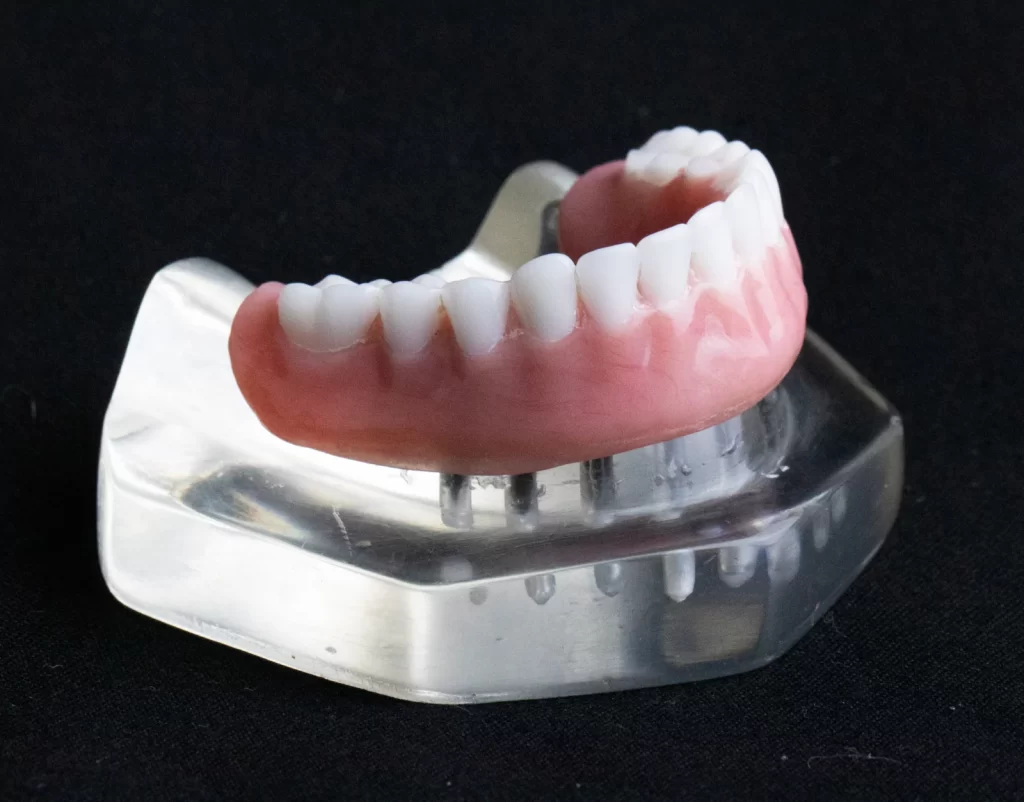
Partial dentures are removable appliances that can be used to replace multiple missing teeth, often in different areas. They’re a good option when a long fixed bridge would be hard to support.
If you’re in a bit of a holding pattern and need to gradually improve your teeth over time, partials can be adjusted as you go, which can be a lot easier on your wallet and your patience. They can be adjusted as your needs change, so you don’t have to lock yourself into one fixed solution right from the start.
Full dentures (an arch is missing)
Full dentures are used to replace all the teeth in one arch and sit on your gums. It takes a bit of getting used to, and you’ll likely need to make some adjustments in the first few weeks, so don’t be too hard on yourself if it doesn’t feel perfect from day one.
Over time, your gums will change, and it’s likely you’ll need to have your dentures relined to keep them feeling comfortable. It’s not just something you have to do; regular follow-ups will actually help protect your comfort in the long run.
If you’re in the US or Canada and are checking out your options, CCD can usually start with a Free Virtual Diagnostic in under 24 hours, so you can get a better idea of your options before you travel. Try to start with a remote assessment where you can; that way, when you do travel, it’ll be a lot less stressful.
The Key differences: comfort, stability, upkeep, and timeline
If you’re stuck between dentures vs bridges, try using this simple checklist to guide your consult. It’s not a diagnosis, but it can help you ask some more informed questions.
Choose a bridge when:
- You’re missing just one tooth or a short patch, and the teeth next to the gap are strong enough to support it.
- You prefer a fixed solution for eating and talking.
- You’re happy to commit to cleaning the bridge every day.
Choose a partial denture when:
- You’re missing several teeth, or the gaps are too big to bridge safely.
- You want something that you can take in and out of, and that can be adjusted if your needs change.
Choose a full denture when:
- Most or all of your teeth are missing in one arch, and you need a full set of replacement teeth.
- You want a non-surgical option that involves regular follow-ups to keep you comfortable.
What your dentist needs to check out first:
- How healthy your gums are and whether there’s any infection.
- What the remaining teeth look like and whether they’re healthy enough to support a bridge.
- Your bite and how your jaw functions.
- Whether there are any bone or tissue changes where teeth have been missing.
- What you’re looking to achieve, your timeline, and what you can realistically do to look after your teeth at home.
The thing is, the best solution is usually the one that fits your mouth and your lifestyle, not just your budget. It’s the habits that decide the outcome when the options are close.
The third option you need to know about: dental implants and implant-supported dentures
Even if you’re here to compare dentures and bridges, it’s worth knowing about the third option: implants. Having a root makes a big difference to stability because implants replace the root support that bridges and traditional dentures don’t. They make a big difference.
Some of the ways implants can help:
- One implant can be used to support one crown.
- Implants can be used to support a bridge without relying on the neighbouring teeth.* Implants can add a whole new level of security to a denture (whether it’s a snap-in or an overdenture), and you’ll feel a lot more confident with it in.
If you really dread the idea of your denture wobbling around, or getting stuck on with adhesives, or having to get it relined all the time, ask about how an implant-supported option could work for you. Get a real sense of the upgrade path so you know what you’re getting into before you commit.
Planning Your Dental Trip in Mexico: Cancun vs Los Algodones
When you’re looking at Mexico for your dental trip, two places tend to come up a lot: Los Algodones and Cancun. And the vibe in each of them is really different, which can make a big difference in how you plan your whole trip.
Los Algodones is super convenient if you’re coming from the US, but Cancun is really set up for people who are looking for a bit of a vacation, which can be a nice way to make your recovery time feel more relaxed.
How long your trip is going to be is going to depend a lot on what you need to do. Do you need some extractions or some gum treatment before you can even start on the main work? Each case is different, so it’s really worth getting the sequence right before you book.
Starting with CCD: Clear, No-Pushy Medical Advice
First things first, you should book a Free Virtual Diagnostic, upload any X-rays that you do have, share some photos, and tell us what you want to sort out. Then, we will send you a personalized video diagnosis from Dr. Germán Arzate, all within 24 hours or less. It’s a great way to get clarity on things before you even start thinking about traveling.
And if getting some support with travel is important to you, make sure to ask early on about things like how far apart your appointments will be, what your hotel schedule will be like, and our airport shuttle. We’ll be glad to make it as easy as possible for you.