

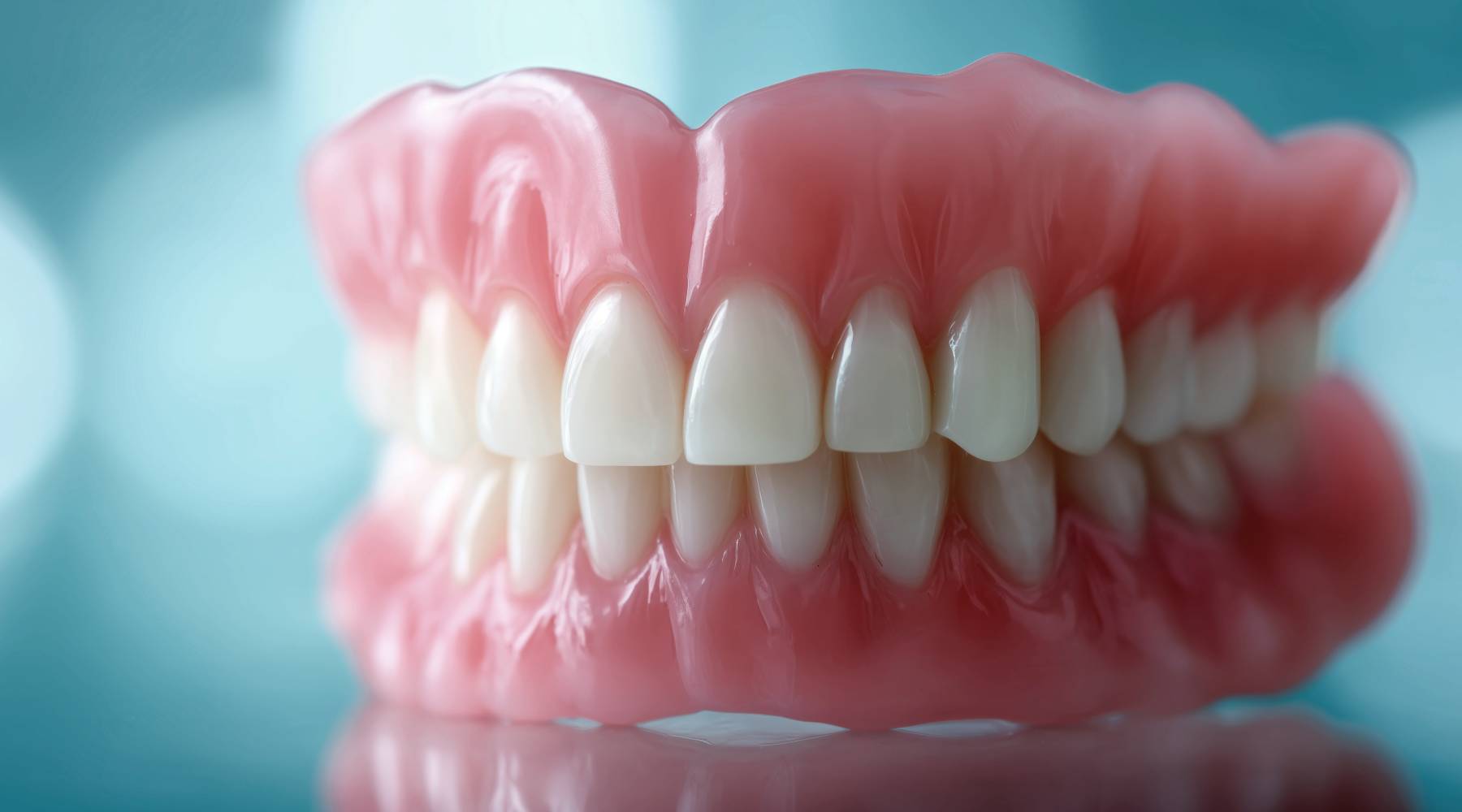
You’re probably weighing your options between dental implants & dentures because you’re looking for a way to solve a problem that’s been eating away at you. We’re talking about comfort now, and confidence in the years to come.
Those loose dentures, the sore spots, and “Will this fall out?” anxiety that’s been driving you crazy can be really wearing on you. On the flip side, surgery can feel like a pretty big step.
This article will help you figure out which solution is best for you, and how to ensure it’s one that’s going to give you long-term durability and a natural look.
Mexico’s a popular destination for dental tourism, with Los Algodones & Cancún being two of the stops you’ll hear about time and time again. But it’s rarely a straightforward implants-vs-dentures decision.
A lot of people end up somewhere in the middle with dentures that get support from implants, which add a bit of stability without going the whole fixed route. Whether you’ve got missing or damaged teeth, replacing them is key for both how well they function & how they look, and both options can help with that.
So, what’s the real deal with filling in those gaps?
Tooth replacement is more than just a cosmetic fix; it’s actually a pretty vital part of keeping your oral health on track & your overall well-being in check. When you’ve got missing teeth, it can affect just about everything from how you eat & speak to how your face looks.
Two of the most popular options for filling the gap are dental implants & dentures. Dental implants involve sticking titanium posts into the jawbone, and then using those to anchor in artificial teeth that look & function just like the real thing.
Full mouth dental implants can even restore a whole arch of teeth, which makes ’em a long-term solution for people who’ve got a lot of tooth loss going on. On the other hand, dentures are removable devices you can use to replace missing teeth & the surrounding tissues, and they can really help get your smile back & your confidence up.
Getting to grips with the differences between these options is basically key to choosing the best way to replace missing teeth, and keep your facial structure in good shape for years to come.
Dentures vs implants vs full mouth dental implants
This is general education, not medical advice, and your exact plan depends on your bone and gum health and medical history.
| Option | How it feels day to day | Cleaning | Surgery level | Best fit if you want… | Travel reality (typical) |
| Traditional dentures (complete or partial) | Complete dentures (replace all teeth in an arch) may slip, especially lower; partial dentures (replace some teeth) are more stable but still removable; both may need adhesive | Remove daily to brush and soak; dentures are typically made of porcelain or acrylic and supported by the gums | No implant surgery | Lowest upfront cost, a removable solution, and quick to get | Adjustments and relines are common every 3-4 years; plan time for fit checks; need replacement every 5-7 years |
| Implant-supported dentures (snap-in / overdenture, fixed and removable options) | Much steadier; less slipping; fixed denture options are permanently attached to implants and cannot be removed at home, while removable options can be taken out for cleaning | Removable types: take out to clean; fixed types: brush and use special tools under the bridge | Minor surgery (implants placed) and oral surgery; implant patients should expect some recovery | More stability, improved chewing and speaking; preferred by patients who find traditional dentures uncomfortable or unstable; can anchor onto 2-4 implants for a secure fit if enough jawbone is present | A first stage can sometimes fit within one trip, depending on the case; ongoing maintenance is needed |
| Dental implants (single tooth or bridge support) | Feels most like natural teeth; implants restore nearly 100% of biting force and allow eating any food; designed to look and feel like real teeth | Brush and floss like normal teeth; care is similar to natural teeth | Moderate (oral surgery to place titanium posts in the jawbone); implant patients should be aware of the surgical process and recovery | A fixed tooth replacement in one area; long-term investment; single tooth implant costs around $3,000 | Often staged because healing takes time; plan for follow-ups; it can last a lifetime with proper care |
| Full-arch implants (All-on-4 style, just four dental implants) | Fixed teeth feel strong bite; very stable, won’t slip or move | Brush plus tools under the bridge; similar to caring for natural teeth | Moderate to advanced oral surgery; uses just four dental implants to support a full arch | A fixed full-arch solution, no adhesives, preserves jawbone structure over time | Usually staged; a first trip may include provisional teeth; long-term solution |
What do you really want to get out of all this? Fixed and Removable Options
Before you start picking a treatment, take some time to figure out what ‘success’ looks like to you. Otherwise, you can end up buying the wrong solution for the right problem.
Ask yourself:
- Do you want teeth that are fixed in place, or are you okay with removing them to clean them?
- Is it the slipping & soreness that’s really bugging you, or is it the look or feel?
- Do you want to be able to bite into steak & apples, or is “being able to eat normally” your main priority?
- How do you feel about surgery & having to go through a healing period?
- Right now, is it the upfront cost that’s a major issue, or do you care more about the long-term cost of ‘fixing’ things?
If you’re honest with yourself about what you want, a dentist can match you up with the right option. And of course, the condition & number of your existing teeth will also come into play, all of which can influence whether you need to do extractions, partial dentures, or dental implants, and which of those might be right for you.
Conventional dentures: when they still make sense
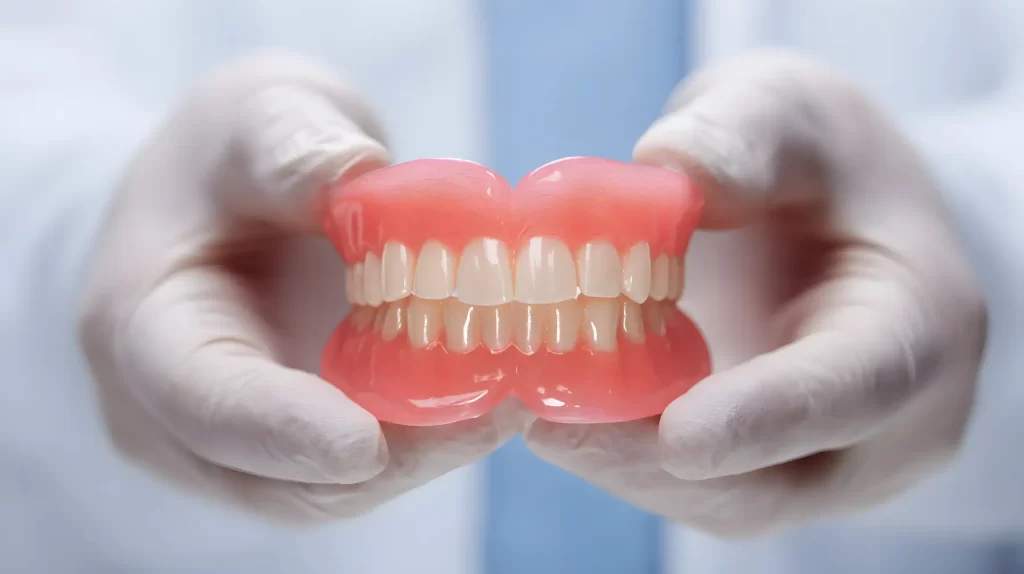
Traditional dentures are just regular old replacements that sit on the gums & can restore a few missing teeth or a whole arch. Partial dentures work around the teeth that are still in your mouth, while complete dentures replace all of them in one go.
Usually made from acrylic or porcelain, dentures remain a popular option because they can restore your smile pretty quickly, cost less upfront than implants, and don’t require any surgery.
But dentures do come with some ongoing hassle. You’ll need to take them out & clean them every day, & they might slip or shift around while you’re eating or speaking, especially as the shape of your mouth changes over time after tooth loss.
Eventually, a lot of wearers need to get some relines or adjustments, or use adhesives to keep them in place.
Dentures need to be replaced every 5 to 7 years, and often need adjustments every couple of years as the jawbone & gums change. Because dentures don’t help stop bone loss in the jaw, long-term fit & stability can start to decline over time.
Getting a good denture plan in place is all about regular follow-ups, maintenance, and having realistic expectations about future adjustments & repairs.
Implant-supported dentures (snap-in): the upgrade path for a more stable bite
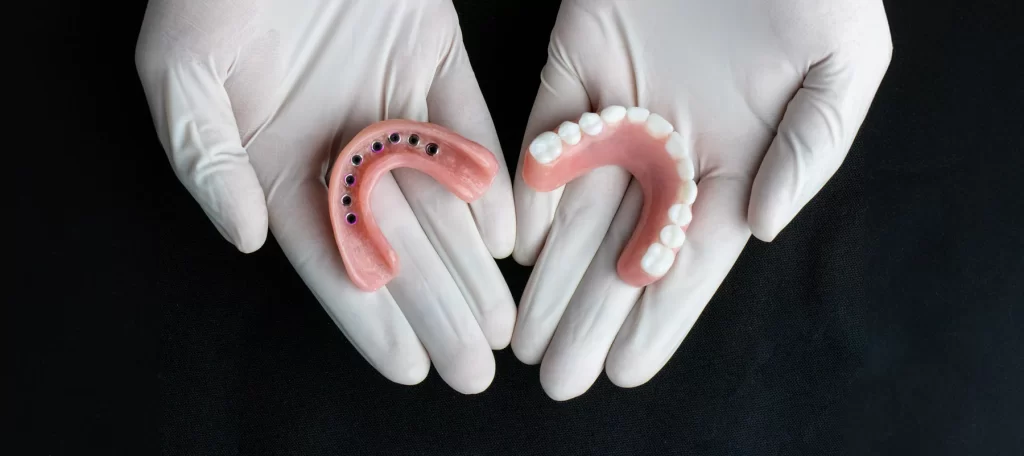
Implant-supported dentures use the dental implants anchored in the jawbone to give you a more secure & stable fit than traditional dentures. They come in both fixed & removable “snap-in” options, which means you can tailor your treatment to your bone health, medical history, & personal preferences.
Fixed or hybrid dentures stay stuck in place and get cleaned just like natural teeth. Removable snap-in dentures can be taken out for cleaning, but still give you a strong, stable bite every day.
Unlike traditional dentures, which just rest on the gums, implant-supported dentures are usually secured with up to 4 implants, which can help with comfort, chewing ability, speech, & overall confidence. They’re often the preferred option for people who’ve had enough of slipping or loose dentures.
Implant-supported dentures may also help keep your jawbone structure in good shape over time, which can help prevent it from shrinking down after tooth loss. However, treatment does require surgery, healing time, & ongoing oral hygiene, and you’ll need to have enough healthy jawbone to support the implants.
Thinking about getting Dental Implant Surgery or Dentures? CCD’s here to help

At Cancun Cosmetic Dentistry, we’ve got a top-notch team looking after you. Dr. Germán Arzate ABOI/ID Diplomate leads the way with implant planning, and we’ve got some cutting-edge tools to make the process smooth & efficient: digital imaging, 3D scanners on-site in our lab, and bilingual communication to ensure you get all the info you need.
Plus, we only use top-grade, FDA-approved materials flown straight in from the States. New patients can even get a Complimentary Virtual Diagnostic. We’ll send you a personalized video diagnosis within 24 hours of uploading your X-rays.
If you need some extra help getting here, we can arrange a courtesy airport shuttle and help you find a hotel to stay at, just ask us!
Dental Health Considerations for denture and implant patients: Cost & Budget
You’ll need to think about a few things when choosing between implants and dentures: your oral health, lifestyle, and what you can afford. For implants to work, you’ll need healthy gums and enough jawbone in the first place, and sometimes that means having a bone graft or a treatment or two beforehand.
And of course, your medical history and how well you can heal are going to play a big role too, which means regular check-ups with your dentist are just as important for a successful outcome, whether you choose implants or dentures.
Then there’s the cost. Traditional dentures are usually cheaper upfront, but dental implants are a bigger investment right from the get-go, especially if you need some extra procedures first.
But here’s the thing: implants can last a lot longer and might save you money in the long run; they don’t need adjusting or replacing like dentures do. It really comes down to weighing up what you want for the long term and what you can afford to fit into your budget.
The Future of Tooth Replacement
Things are changing fast in the world of tooth replacement; new tech and materials are coming out all the time. Dental implants have been a game-changer for a lot of people, offering a solid base for new teeth that’s really hard to beat.
Advances in implant surgery and new materials have made it possible for more people to get implants than ever before. They look and feel more natural than ever.
And then there are implant-supported dentures: these let you have the best of both worlds, the stability of an implant with the convenience of dentures. As science moves forward, we’re going to be able to offer more tailored and effective solutions to people.
Whether you’re thinking implants or dentures, staying up to speed on the latest developments will help you make the best choice for your smile and your long-term oral health.